Ali Sadeghian

Composer · Musician · Visual Artist

A professional artistic practice integrating Persian rhythmic heritage with contemporary composition and visual art.

Explore the Collection

Biography

Ali Sadeghian was born in Tehran, Iran, and relocated to Sweden in 1984. His early exposure to Persian musical traditions established the foundation for his long-term engagement with rhythm, structure and cultural continuity. Raised within a context where rhythm carries both technical and expressive significance, he developed a disciplined appreciation for formal musical architecture at an early stage.

During the mid-1980s, he began formal studies in traditional Persian percussion, focusing on instruments such as the tonbak and daf. These instruments require precise control of tone, timing and dynamic articulation. Through sustained study and performance, he established a strong technical base that continues to inform his compositional approach.

In parallel with his artistic development, Ali pursued academic studies in computer science and engineering in Sweden. This analytical background significantly influenced his methodology. His work reflects systems-oriented thinking, where each component functions within a structured whole. Rather than separating technical and artistic disciplines, he integrates structural planning with creative expression.

Over several decades, he has performed in cultural institutions and artistic venues across Sweden. His collaborative engagements include musicians from diverse stylistic and cultural backgrounds. In addition to his music and visual art, he has contributed to Swedish media productions, including film and television.

Today, Ali Sadeghian continues to compose, produce and develop visual projects with a clear focus on structural integrity, professional discipline and cultural dialogue.
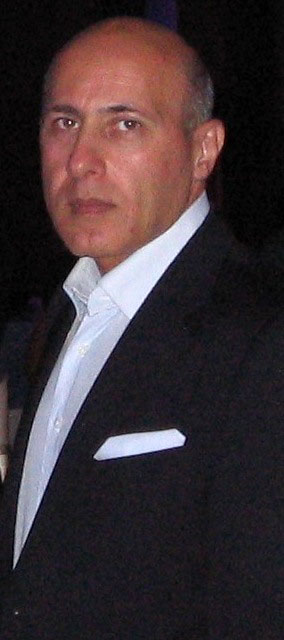
Ali Sadeghian portrait
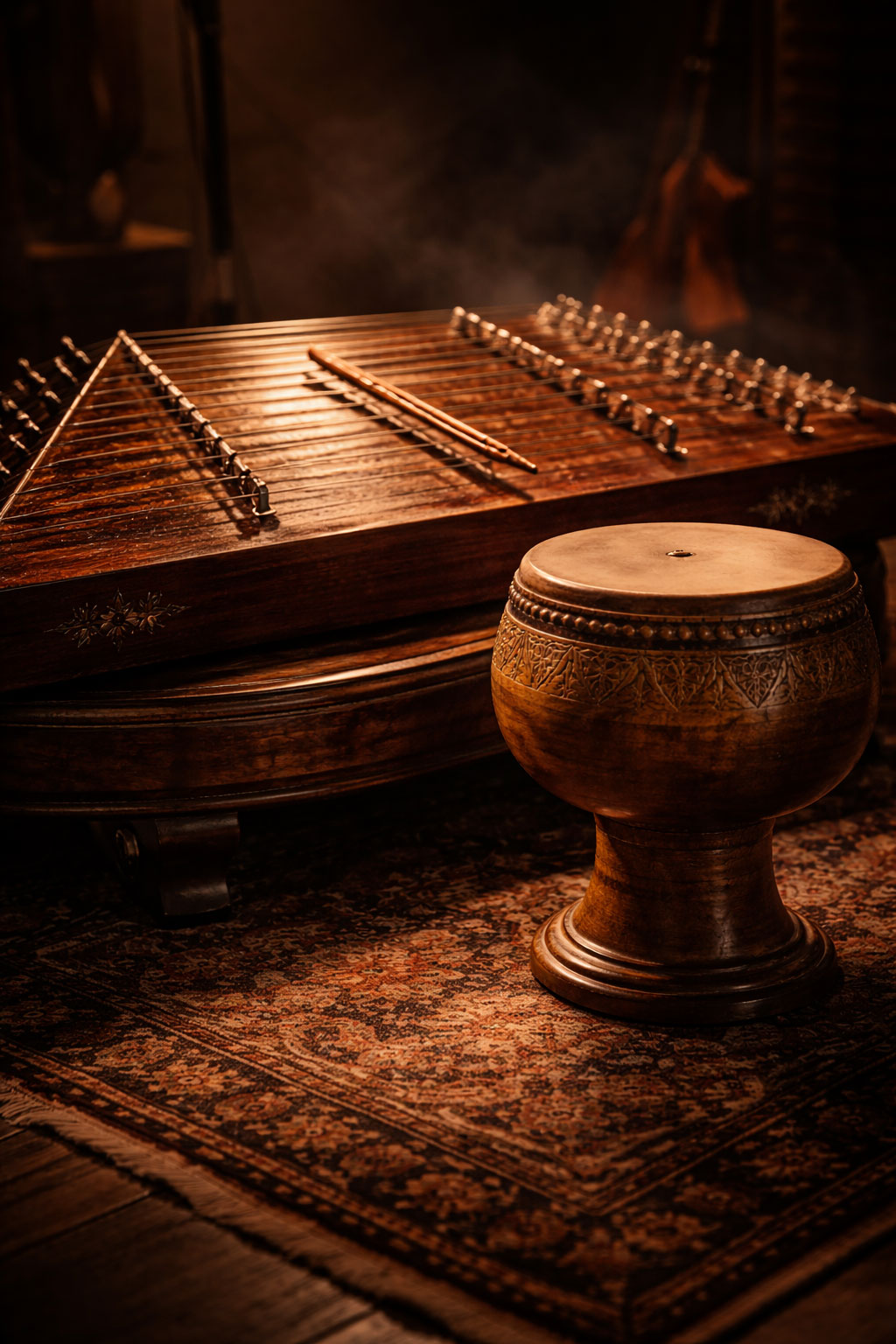
Persian tonbak and santur

Music

Ali Sadeghian’s musical practice is defined by disciplined craftsmanship and structural clarity. His early training in Persian percussion established a precise rhythmic foundation that continues to shape his compositional identity.

Over time, he expanded his instrumental and compositional framework to include piano, santur and contemporary production methods. This development enabled the integration of harmonic structure, tonal layering and atmospheric progression into his rhythmic base.

Rather than positioning his work within a single genre, his compositions bridge Persian classical rhythmic systems with contemporary cinematic and ambient expression. Each work is constructed with attention to balance, pacing and structural coherence.

His album Reaching for the Stars (2012) represents a milestone within his discography, demonstrating his capacity to combine traditional rhythmic precision with modern production aesthetics. His music is distributed internationally and continues to evolve through disciplined compositional practice.

Piano in studio lighting

Art

In parallel with his musical work, Ali Sadeghian maintains a visual art practice grounded in abstraction and structural balance. His visual compositions emphasize proportion, tonal contrast and spatial clarity.

The relationship between his music and visual work is methodological rather than decorative. In both disciplines, structure precedes ornament. Each visual element functions within an organized framework.

His artwork avoids excessive symbolism and instead prioritizes compositional coherence and perceptual engagement. Light, shadow and controlled contrast are employed to create depth and dimensionality.

Through digital presentation and independent production, his visual practice reinforces his broader professional identity as an interdisciplinary artist committed to structural precision and cultural continuity.